

99% of roofs worth a second look? How lightweight panels change the approach to photovoltaics
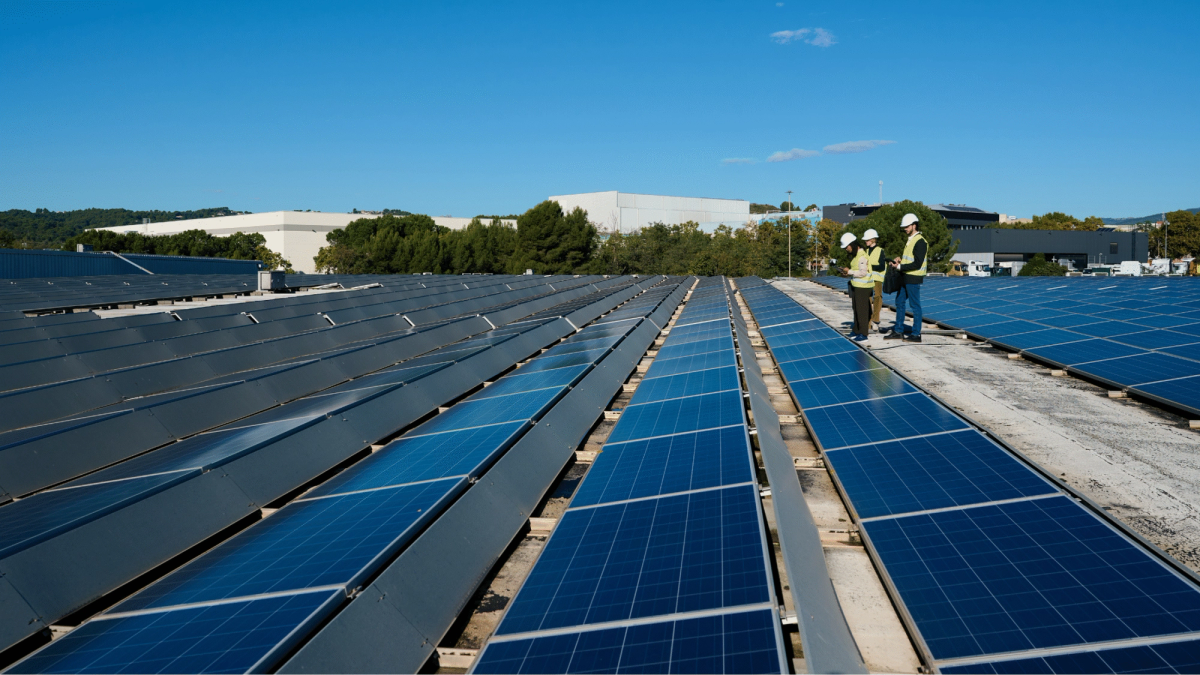
A roof that has been rejected for standard photovoltaics should not always drop out of the investment plans. In many cases the problem is not the building itself, but a PV system that is too heavy, too much ballast or too hasty a judgement that „it cannot be done on this roof”.
Lightweight PV panels change that starting point. They allow a return to roofs previously considered too difficult, structurally too light or too demanding for conventional solutions. On around 99% of roofs where mounting work can be carried out at all, a solution based on lightweight photovoltaics can be considered. That does not mean automatic delivery on every building, but it does show that many roofs deserve a fresh, more thorough analysis.
Why do so many roofs fall out right at the start?
The roofs of large commercial buildings very often have potential for photovoltaics, but do not always fit standard design assumptions. They may have limited load capacity, an unusual covering, a large number of skylights, technical equipment, ventilation installations, chimneys, roof hatches or zones that cannot be loaded in the usual way.
In practice this means a conventional PV system may prove too heavy or too hard to lay out safely. Traditional rooftop solutions often require a support structure, ballast and additional mounting components that increase the load on the building. On large surfaces every additional kilogram starts to matter.
Some investments therefore fall away already at the preliminary assessment. Not always because the roof genuinely has no potential, but because it is analysed solely against a standard photovoltaic system.
What does 99% of roofs worth a second look mean?
An important clarification: this concerns around 99% of roofs on which mounting work can be carried out at all.If a roof is accessible, can be safely assessed and does not rule out technical work, lightweight photovoltaics very often makes it possible to find a solution where a conventional installation would be problematic.
This figure should therefore not be read as a promise of automatic installation on every building. It is rather a signal that a huge number of buildings which might previously have been rejected should be checked again using lighter technology. The 99% shows the scale of the potential; it does not replace a responsible roof analysis.
In practice this change comes down to a different question at the start of the investment. Instead of asking only „will the roof carry a standard installation?”, it is worth asking: „will a lightweight PV system let us use this roof without overloading the structure?”
Why does lightweight photovoltaics change the outcome of the analysis?
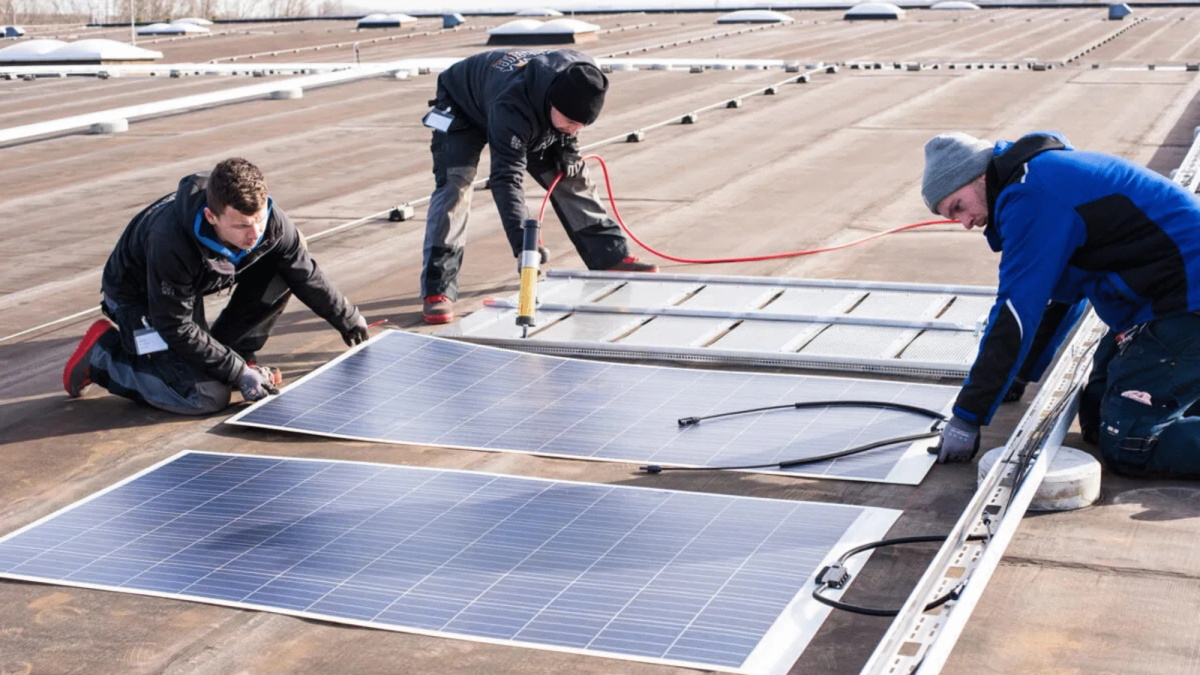
With lightweight PV panels what is crucial is not only the lower mass of the module, but the lower load of the entire system. For the roof what counts is the sum of all elements: panels, structure, fixings, any ballast, cabling and the way the installation is laid out.
The Lekkie Panele system weighs around 5 kg/m², which is up to about 4 times less than traditional rooftop solutions. On large industrial, warehouse or logistics roofs that difference can determine whether the investment is worth analysing further.
It matters most on roofs where the constraint is:
- low or uncertain load-bearing reserves,
- the need to limit ballast,
- an unusual roof covering,
- a large surface on which the system's mass accumulates especially quickly,
- an earlier negative assessment for a standard PV installation.
Low mass opens the way to projects that with standard systems would place too great a load on the structure. Particularly where the roof has a large surface but limited load-bearing reserves, a lightweight system can completely change the outcome of the analysis.
The problem is not always the roof. Sometimes the problem is the standard system
Many roofs are not „bad” for photovoltaics — they simply do not fit heavy, formulaic solutions. That is an important distinction, because too hasty a judgement can close down an investment that under a different approach would still make technical and business sense.
A roof with limited load capacity requires technology matched to its constraints. If the problem is mass, ballast or interference with the roof covering, a lightweight PV system can change the range of possible solutions. On such buildings you therefore should not start from a ready-made template, but from establishing where the constraints genuinely lie: in the structure, the covering, the mounting method, the layout of the installation or in the assumptions adopted at the start of the project.
Which roofs are worth analysing again?
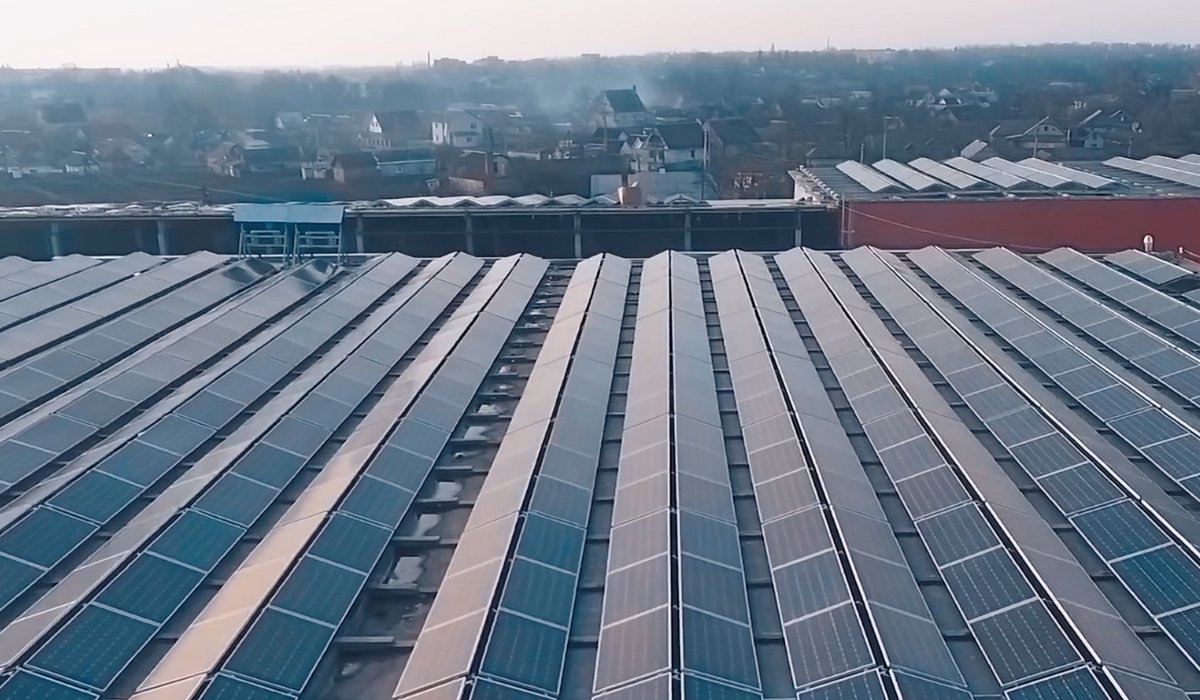
The greatest potential usually lies with large commercial roofs that have the surface but not always sufficient load-bearing reserves for a conventional installation. This applies among others to production halls, warehouses, logistics centres, retail buildings and service properties.
It is on such roofs that the difference between a standard and a lightweight system can be felt most. The larger the installation area, the more the mass per square metre matters.
Buildings that may particularly require a second analysis are those:
- older ones,
- ones being refurbished,
- ones designed without any thought of a future photovoltaic installation,
- ones with a large roof area but limited load-bearing reserves,
- ones previously rejected for a standard PV installation.
In such cases the roof often has energy potential but requires a more cautious technical approach and technology that will not overload the structure.
Does 99% mean a roof analysis is unnecessary?
No — and here you have to be very precise. Lightweight PV panels increase what is possible, but they do not replace technical analysis, roof assessment and a well-prepared concept.
Every roof has to be checked individually. What matters includes: the load capacity of the structure, the condition of the covering, the roof layout, the location of technical equipment, whether work can be carried out safely, orientation, shading and the company's real energy needs.
The 99% shows the scale of the potential but does not release anyone from a responsible design process. It is an argument for not rejecting a roof too early, but checking whether lightweight technology allows an installation to be designed safely and profitably.
Lekkie Panele as a solution for roofs with constraints
Lekkie Panele was created to unlock roofs that can be too demanding for conventional photovoltaics. It is a solution for companies with high energy consumption that want to use their own roof space but run into structural constraints.
Depending on the building's technical conditions, different system variants can be considered. The framed system works where a lightweight module needs to be combined with a support structure, while the frameless system can be the answer for roofs where minimising mass and interference with the building is what counts.
The most important thing is that the choice of system should follow from the conditions of the specific roof, not from one universal template. Only then does lightweight photovoltaics genuinely let you use the building's potential.
Why do companies lose the potential of their own roofs?
A large proportion of companies have a surface overhead that could be generating energy but remains unused. The cause is often not a lack of space but a belief that the roof is too difficult, structurally too light or too complicated for photovoltaics.
Rejecting a roof on the basis of standard technology can lead to a mistaken investment decision. If we analyse only a heavy PV system, it is easy to conclude the project makes no sense. If we take lightweight panels into account, the outcome of the analysis may be entirely different.
It is therefore worth returning to roofs previously deemed problematic. In many cases it is not the roof that is the barrier, but too narrow a choice of technology.
How to properly assess a roof's potential for lightweight photovoltaics?
Assessing a roof should start with the question of which system will place the least load on the building and make the best use of the available surface. Only afterwards is it worth moving on to module layout, installed capacity and design details.
The analysis should above all take into account:
- the safety of the structure,
- the real mass of the whole system,
- the scope for reducing ballast,
- the roof's technical constraints,
- the energy generation potential,
- the company's energy consumption profile,
- the viability of the investment.
A well-prepared analysis does not only answer the question of whether panels can be mounted. Above all it answers the question of whether it can be done safely, efficiently and with a genuine benefit for the business.
Lightweight PV panels change the conversation about corporate roofs
Not long ago many roofs were judged through the lens of conventional photovoltaics' limitations. If a roof had insufficient load capacity, an unusual covering or a complicated layout, the investment often ended up in the „too difficult” category.
Lightweight photovoltaics shifts that boundary. It does not make every roof automatically suitable for PV, but it does make it far more common to move from a quick refusal to a concrete analysis of what is possible.
That is precisely why the information about unlocking as many as 99% of buildings matters so much. It shows that the market for rooftop photovoltaics for business is larger than it might appear if we look only through the lens of standard systems.
It is worth returning to roofs that were rejected before
A roof rejected for a standard installation does not have to be a roof lost to photovoltaics. With the right technology, experience and analysis it can become a space for generating energy for the company.
Lightweight PV panels make it possible to use the potential of roofs previously passed over or rejected.Especially where a standard installation would be too heavy, a lightweight system can open the way to an investment.
It is therefore worth analysing roofs not only through the lens of constraints, but also through that of available technologies. If on around 99% of roofs where mounting work is possible lightweight photovoltaics can be considered, many companies may have greater energy potential than they assumed at the outset.
Check whether your roof has potential for lightweight photovoltaics
If your roof was previously rejected for a standard PV installation, it is worth analysing again from the perspective of lightweight panels. We combine low-mass technology with experience in assessing roofs of limited load capacity, which is why we help companies check whether their building can still work towards generating its own energy.
Get in touch if you want to verify your roof's potential and find out whether a lightweight PV system is the right solution for your company.