

Photovoltaics for public sector bodies – how lightweight technology changes the way roof potential is assessed
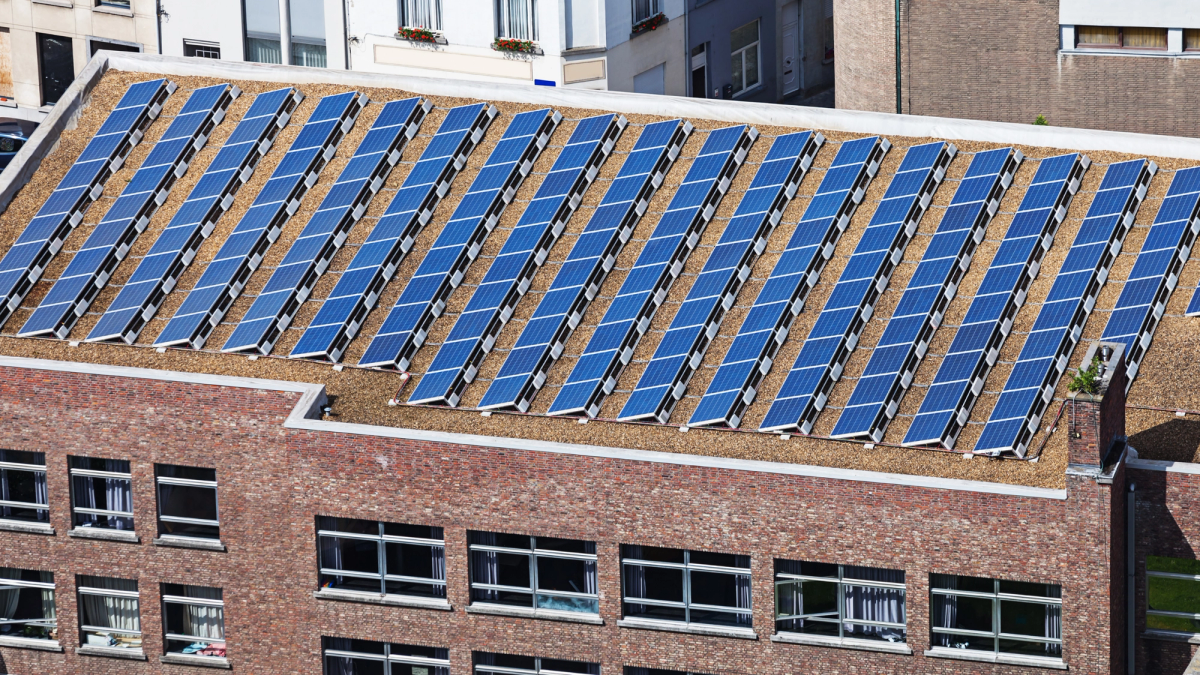
Many public buildings have potential for photovoltaics, but not every roof can be judged through the lens of a standard PV installation. Schools, council offices, volunteer fire stations, community centres, sports halls, wastewater treatment plants and municipal facilities often have roofs with limited load capacity, older structures or a covering that calls for particularly careful mounting. In such cases the key question is not only: how many panels will fit on the roof? Far more important is: which technology will let us use this roof without overloading the structure?
Not every public roof is ruled out for lack of space
When first assessing PV potential, the easiest thing to look at is the roof area. A large roof seems a natural candidate for an installation, a smaller one less attractive. In practice that approach is often too simplistic.
For public buildings the constraint is very often not the area itself but the roof load capacity, the condition of the structure, the type of covering, shading, the layout of technical equipment or whether safe mounting is possible at all.
That is why a roof that looks promising at first glance may require additional analysis. And the other way round — a building that was previously not qualified for investment may still hold potential if lighter PV solutions are taken into account from the outset.
A standard PV installation should not always be the benchmark
Some public roofs are ruled out too quickly because they are analysed solely against conventional photovoltaic systems. Yet a standard installation is not the only possible technological option.
If a roof has limited load capacity, the mass of the whole system becomes the key parameter. Traditional solutions used on commercial roofs can weigh as much as 40 kg/m², while the ultralight Lekkie Panele solutions come in at around 5 kg/m². That is up to eight times less load, which can significantly change the assessment of whether mounting on a given building is feasible.
This does not mean that every difficult roof is automatically suitable for an installation. It does mean that before ruling one out it is worth checking whether the real constraint is the building's structure or rather the technology taken as the benchmark.
Lightweight technology changes the question we ask at the start
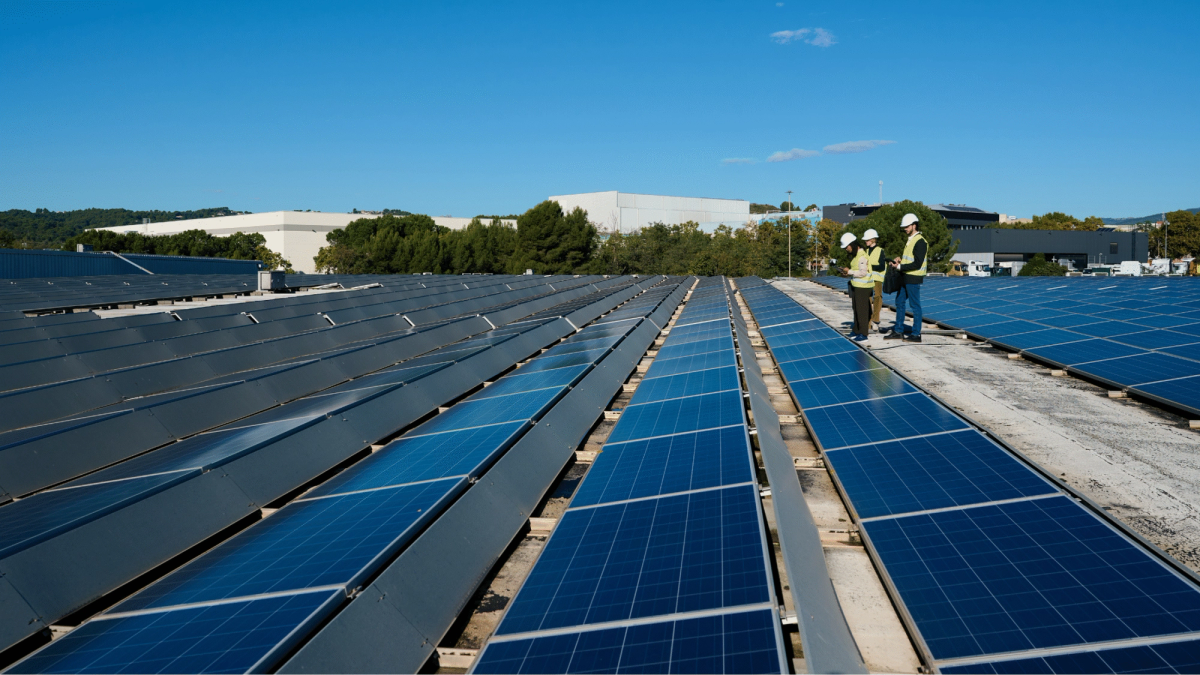
In the classic approach the investor asks: will the roof carry photovoltaics? With lightweight systems the question should be framed differently: which photovoltaic variant can be matched to what the roof can actually take?
It is an important difference. In the first case the roof is judged against a single template. In the second, the technology is fitted to the constraints of the specific building.
For public sector bodies this matters especially, because they manage buildings of very different ages, structures and uses. A school roof may call for a different approach than the roof of a council office, a community centre or a fire station. A sports hall may have a large surface but a different load-bearing structure. A treatment plant or municipal works may have a favourable energy consumption profile but require a more bespoke design.
Where can lightweight PV systems matter most?
The greatest potential of lightweight technologies appears wherever a standard installation would be too heavy a load or would require excessive interference with the roof.
This applies in particular to older schools, volunteer fire stations, community centres, administrative buildings, sports facilities and some municipal properties. Such buildings often have enough surface area for PV, but their roofs are not always prepared for conventional mounting systems.
In precisely such cases the mass of the system is not a technical detail. It can decide whether a roof is deemed usable or is left out of the investment plan altogether.
It is not only about the panel, but about the entire mounting method
Lightweight photovoltaics is not just a lower module mass. The mounting method, the type of structure, reduced ballast and the installation's effect on the roof covering matter just as much.
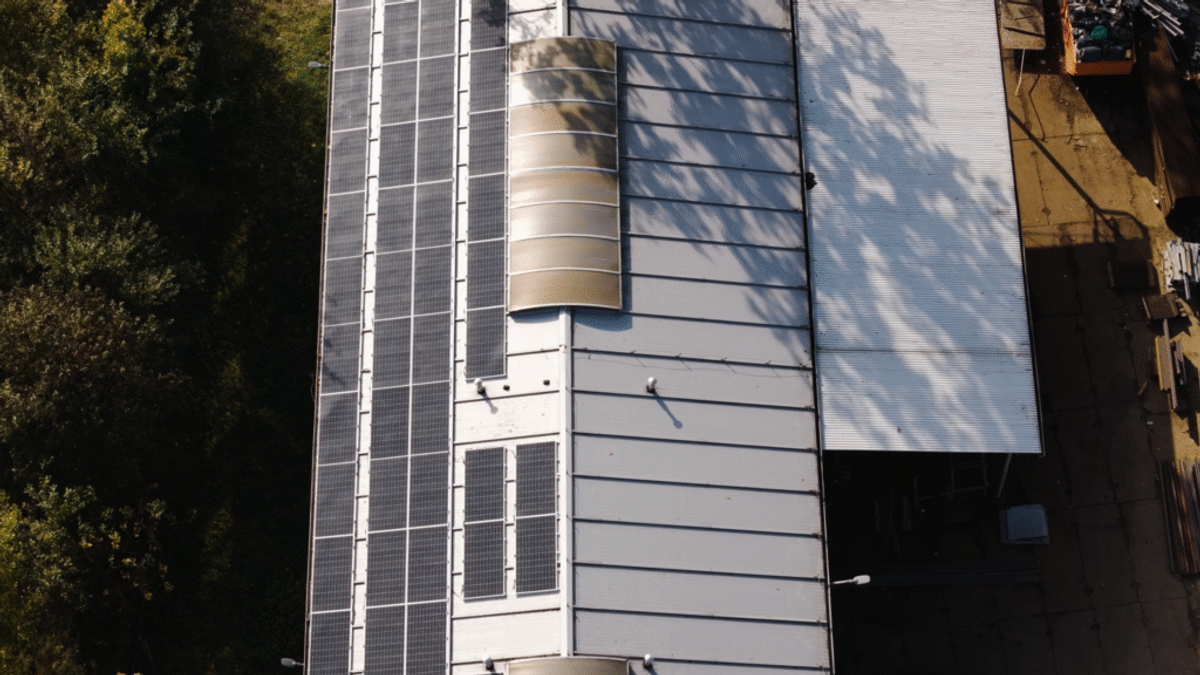
In the Lekkie Panele framed system, lightweight modules with an aluminium frame are mounted on a light support structure using heat-welded technology. It is a solution intended for, among others, low load capacity roofs on large buildings, warehouses and halls. Another important feature is its complete watertightness provided by the welded system.
In the frameless system, modules can be fixed directly to bituminous felt, a roof membrane or trapezoidal sheeting — with no drilling and no interference with the structure. That matters especially where the priority is to limit the risk of leaks and keep the roof sealed.
A roof deemed difficult may simply need a different design
In practice, lightweight technology can change how buildings are qualified for investment. A building that scores poorly against a conventional system does not have to be automatically excluded. It may simply require a different technological variant.
This is particularly relevant in the public sector, where a single portfolio covers many different roofs. Some will be suitable for standard solutions. Some will require lightweight or ultralight systems. Others may need an additional structural assessment before a decision is taken. That is why an analysis of PV potential should consider several technological scenarios from the very beginning, not just one type of installation.
Technology should be considered before the tender
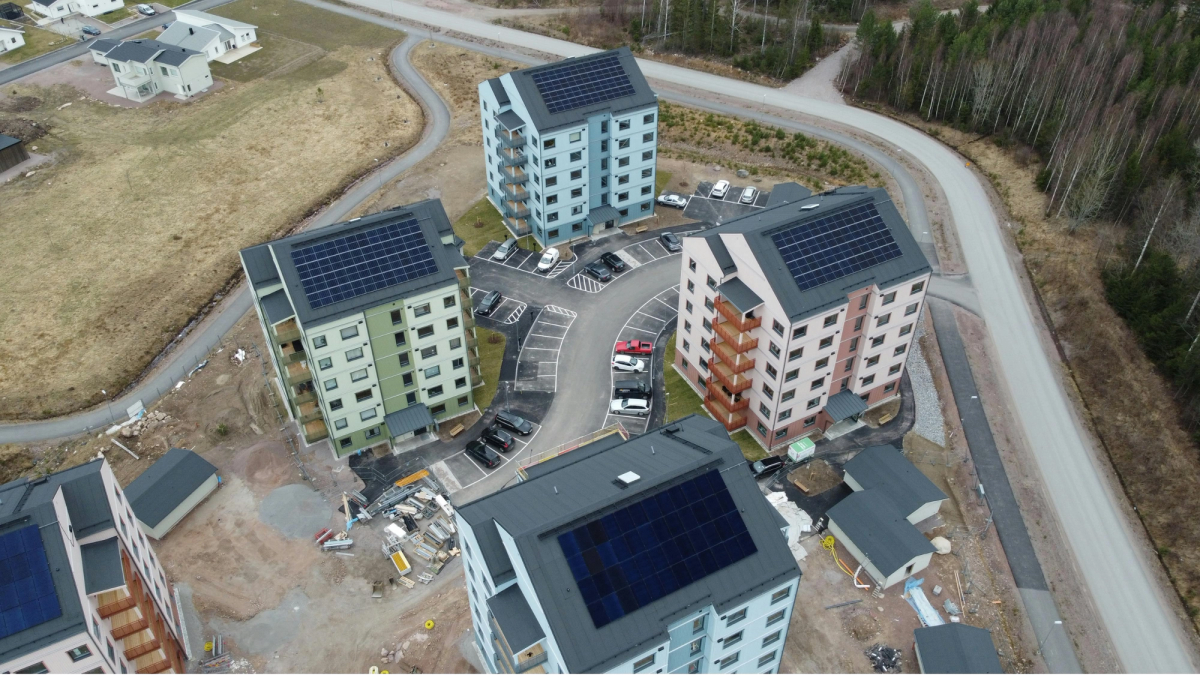
If a tender is prepared on the basis of assumptions that are too general, it may fail to account for the most important roof constraints. For buildings with low load capacity, parameters such as installation mass per square metre, the mounting method, interference with the covering, the effect on watertightness and the scope for reducing ballast are especially important.
These are not details worth leaving until later. If the documentation does not describe the roof's real requirements, contractors may propose solutions that are not comparable or not matched to the building. As a result, a problem that should have been resolved at the analysis stage comes back during delivery.
Lightweight technology does not replace technical analysis
Lightweight PV systems can increase the number of usable roofs, but they do not remove the need for a thorough technical assessment. The technology should follow from the conditions of the specific building, not from an assumption that one solution will suit everything.
Before choosing a system you need to check, among other things, the load capacity and technical condition of the roof, the type of covering, the structural layout, shading, cable routing, service access and the building's energy consumption profile. Only then can you decide whether a standard, lightweight, ultralight, framed or frameless system is the right one — or whether the building requires further expert assessment.
Lower mass can mean greater potential across the whole portfolio
For public sector bodies the greatest value of lightweight technology does not lie solely in making installation possible on one difficult roof. Its significance only becomes clear when a larger portfolio of buildings is analysed.
If a municipality or authority looks after a dozen or more buildings, some roofs may be passed over under the classic approach. Once lighter systems are taken into account, the list of usable buildings may look different. That can change the order of the phases, the scope of the investment and the way the documentation is prepared.
Lightweight technology does not merely reduce the load on the roof. It can also increase the real PV potential of an entire portfolio of public buildings.
A difficult roof does not have to mean the end of the investment
Photovoltaics for public sector bodies calls for a different perspective than a standard project for a single building. Here what counts is not only the roof area, but also its structure, load capacity, covering, mounting method and the technology that will allow the building to be used safely.
That is why roofs with limited load capacity should not be ruled out too quickly. In many cases they do not signal a lack of investment potential, only the need to change the design assumptions.
First the roof analysis. Then the choice of technology. Only afterwards the design and the tender. It is precisely this order that lets public sector bodies assess the real potential of their buildings — including those that standard photovoltaics might have written off as too difficult.