

85 GW of potential blocked by the weight of the installation. Lightweight PV panels unlock difficult roofs
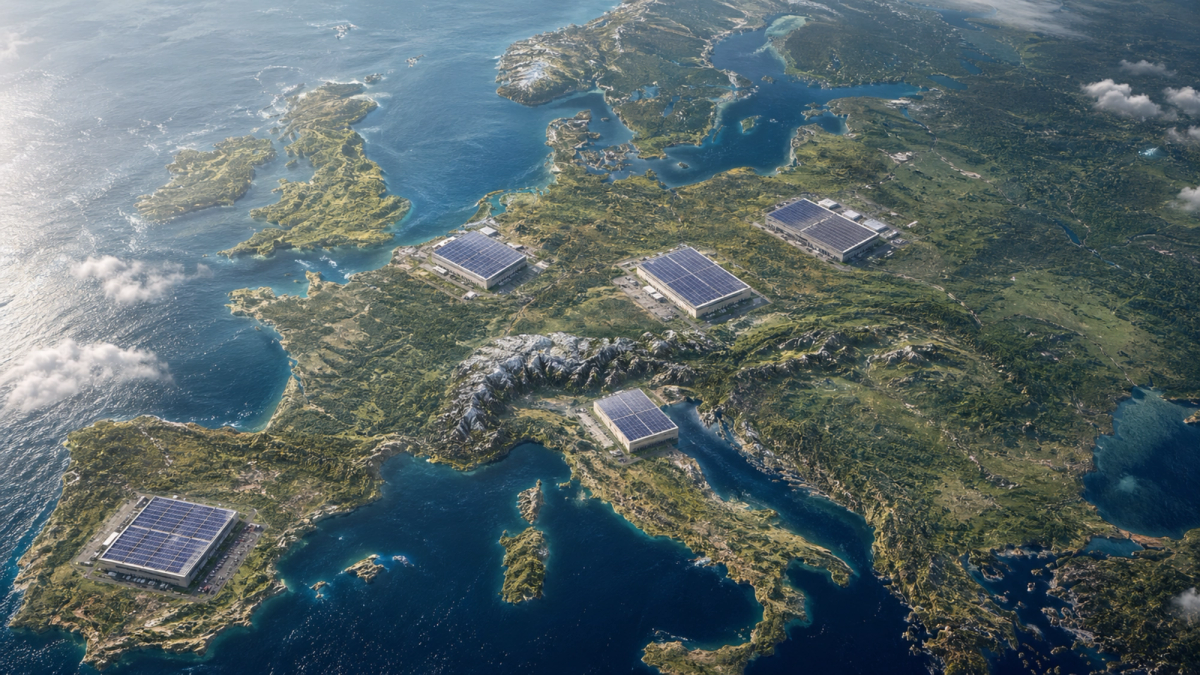
Some roofs do not need more surface, better sunlight or another general viability analysis. They need lighter technology. For many commercial and industrial buildings the problem is not a lack of room for photovoltaics, but the weight of a conventional PV system.
Analysis by the Becquerel Institute, described by pv magazine, indicates that lightweight photovoltaic modules could unlock more than 85 GW of potential on commercial and industrial roofs in Europe. This concerns existing buildings that often go unused for PV not because they lack adequate surface, but because their structure was not designed with the additional load of a conventional installation in mind.
It is here that lightweight PV panels change the way an investment is thought about. A roof that drops out of the analysis with a standard system can come back into play with lightweight technology.
Roofs with limited load capacity – the hidden barrier to PV growth
Many halls, warehouses, logistics centres, service buildings and industrial facilities were built at a time when nobody assumed the roof would one day serve an energy function. Structures were designed for specific service loads, snow, wind and the requirements in force at the time of construction. A reserve for an additional PV installation was often simply not provided for.
From the outside such a roof may look perfect: large, flat, well exposed to the sun, located directly above the point of energy consumption. Only technical analysis shows whether the structure can safely take the additional load. In many cases the answer with a conventional PV system is: no, or only after costly strengthening of the roof.
This is one of the reasons why a large share of corporate roofs in Europe remains unused. The problem is not the roof itself, but the mismatch between standard technology and the roof's real structural possibilities.
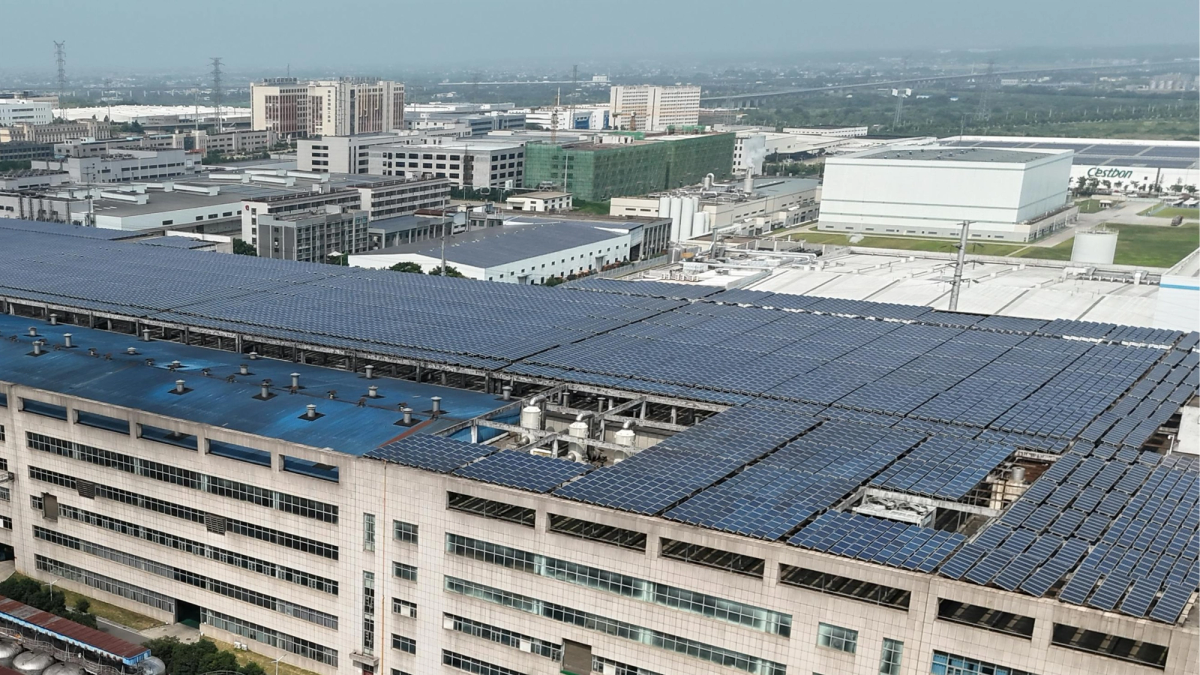
40 kg/m² versus 5 kg/m² – the difference that changes the project
In conversations about photovoltaics the question of panel weight often comes up. It is an important parameter, but for the roof what is crucial is the total system load. What counts is not only the module, but also the mounting structure, ballast, installation components, cable routes and every component needed for the installation to operate safely.
A conventional PV system can generate a load of as much as around 40 kg/m². Lightweight PV panels can weigh around 5 kg/m². On a small surface the difference is noticeable. On the roof of a hall, warehouse or logistics centre it becomes strategic.
For example: on a roof of 1,000 m² a conventional system can mean a load of up to 40 tonnes. A lightweight PV system on the same surface may weigh around 5 tonnes. That is not a cosmetic difference in specifications — it is often the line between a feasible and an unfeasible investment.
Lightweight PV panels should therefore not be treated as a „lighter version of standard panels”. In many projects they are a separate category of technology that makes it possible to design photovoltaics on roofs previously considered too difficult, too weak or too costly to adapt.
Why is the mass of the whole system more important than the mass of the module alone?
Standard PV modules usually weigh far less than the complete system mounted on the roof. The pv magazine article notes that standard panels alone can weigh over 10 kg/m², depending among other things on glass thickness and module construction. On top of that comes the entire mounting system, which in practice can multiply the load felt by the roof.
On roofs with limited load capacity a comparison of catalogue module weights is therefore not enough. You have to examine the full assembly: the fixing method, the need for ballast, load distribution, how the structure responds to wind and snow, the condition of the covering and servicing options. The roof does not „see” an individual panel — the roof carries the weight of the whole system.
That is why analysing lightweight photovoltaics has to be conducted differently than a simple product comparison. The key question is: which installation variant will allow the roof to be used without exceeding its real technical capabilities?
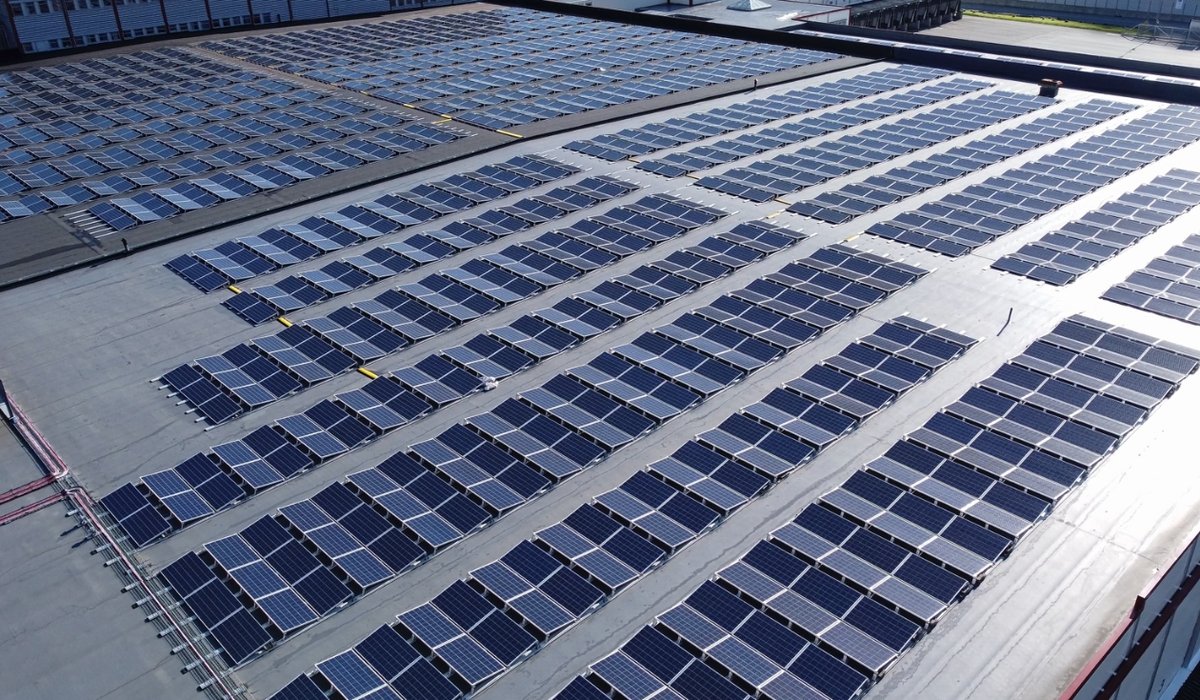
85 GW of potential that is not waiting for new land
The potential identified in the Becquerel Institute analysis does not concern abstract plans or future buildings. It is the potential of existing commercial and industrial roofs that can be used with lightweight modules already available today. Of this figure, around 38 GW falls to industrial buildings and around 48 GWto commercial buildings.
This matters, because it shows that the growth of photovoltaics need not mean solely new solar farms or taking up further land. A huge part of the space for energy generation is already located on existing buildings — above warehouses, halls, shops, plants and logistics centres.
In many cases this space remains unused for one reason: a conventional installation is too heavy. Lightweight photovoltaics makes it possible to return to these roofs and assess them not through the lens of a standard system's constraints, but through the possibilities of technology designed specifically for difficult surfaces.
We also write more about the wider potential of corporate roofs in the article: 85 GW of untapped potential. Corporate roofs as an energy resource for Europe.
Lightweight PV panels or no installation at all – the right comparison for difficult roofs
On roofs with limited load capacity the classic comparison of „standard panels or lightweight panels” can be misleading. Standard modules may be cheaper as a product, but if they require costly strengthening of the structure, a heavy substructure or additional construction work, the total cost of the investment starts to look quite different.
In its analysis the Becquerel Institute stresses that for structurally constrained buildings the right comparison is often not lightweight photovoltaics versus conventional photovoltaics. It is rather: lightweight photovoltaics versus no photovoltaics at all.
That is the heart of the matter. Lightweight PV panels make most sense where a conventional system does not pass the technical analysis, or passes it only after costly, difficult and time-consuming strengthening work. In such cases lightweight technology is not a premium add-on — it is the way to unlock the investment.
When do lightweight PV panels make the most sense?
Lightweight PV panels are worth considering above all on roofs that have a large surface but limited load capacity. This applies to many older industrial buildings, production halls, warehouses, logistics facilities, service buildings and buildings with a lightweight roof structure. The greatest potential appears where the surface exists but the standard system is too heavy.
Such a solution can be particularly relevant when the investor wants to avoid strengthening the structure, or when strengthening is technically possible but hard to justify economically. In many projects additional construction work, downtime, documentation and the risk of interfering with an existing building significantly reduce the appeal of a conventional installation.
Lightweight PV panels are not an automatic answer, however. Every roof requires its own analysis: of the structure, the covering, drainage, the mounting surface, the installation's operating conditions and operational safety.
Lightweight technology requires precise installation
Lower system mass does not mean simpler design. With lightweight modules, surface preparation, compatibility with the roof covering, the fixing method, managing standing water, cable routing and workmanship quality are of particular importance. pv magazine points out that with lightweight solutions the installation and mounting protocols are among the key elements of the durability and reliability of the whole system.
This matters, because lightweight panels often use different mounting methods than standard installations on heavy structures. In many cases the aim is to limit the load and simplify deployment, but this cannot come at the expense of roof safety, the watertightness of the covering or later servicing of the installation.
Lightweight photovoltaics requires knowledge, precision and a very good assessment of the technical conditions. We write more about why choosing a system for a demanding roof is an engineering decision in the Ergosun article: Choosing a rooftop photovoltaic system is not simple. Why do Lekkie Panele demand knowledge, precision and experience?.
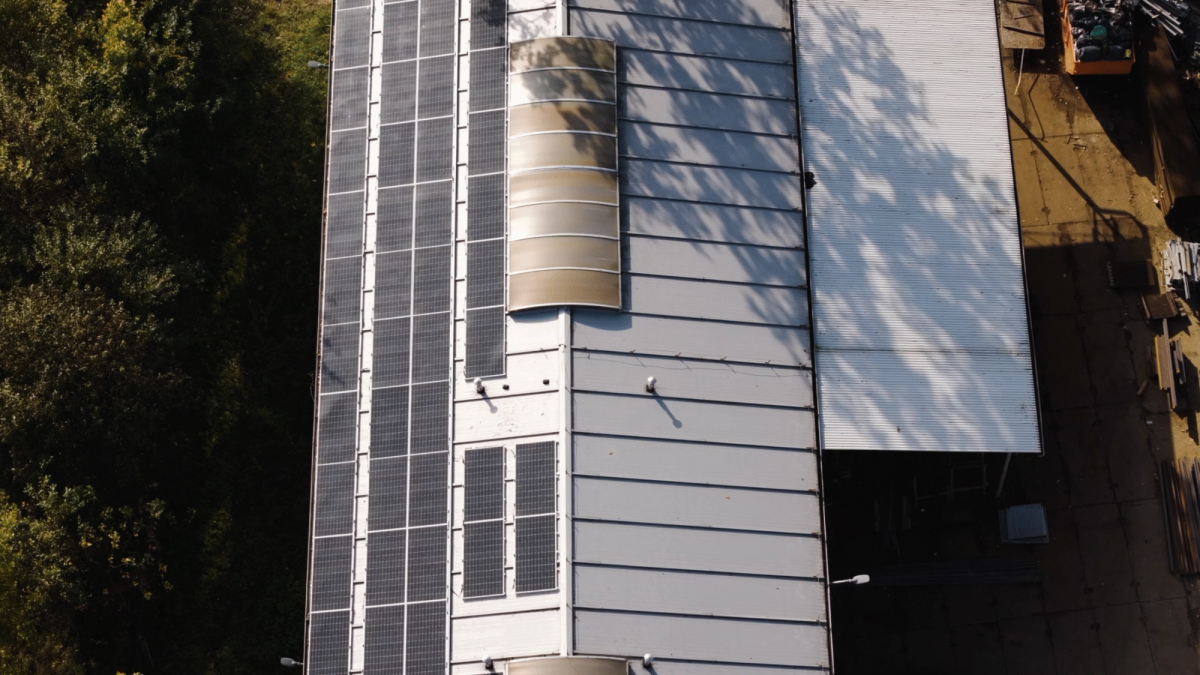
Not every lightweight panel means a good solution for the roof
The market for lightweight PV modules is developing rapidly. Rigid and flexible solutions are available, technologies based on silicon cells and selected thin-film modules. According to the Becquerel Institute, lightweight modules are already a commercially available technology and the European market of manufacturers is gradually maturing.
For the investor this means greater choice, but also a greater need for verification. Not every lightweight module will suit every roof. What matters are the technical parameters, documentation, warranties, the fixing method, compatibility with the covering, the contractor's experience and the installation's real operating conditions.
In lightweight photovoltaics the question „how much does the panel weigh?” is not enough. You have to ask: is the whole system appropriate for this specific roof and this specific way of operating the building?
How to check whether a roof is suitable for lightweight PV panels?
The first step should be a technical analysis. Without it you cannot responsibly determine whether a lightweight PV installation is possible, what surface can be used and which mounting variant will be safe. A roof with limited load capacity should not be judged „by eye” or solely on the basis of a satellite image.
In practice you have to check, among other things:
- the roof structure and available load capacity,
- the type and condition of the covering,
- the layout of the roof planes and drainage,
- the presence of areas with standing water,
- technical obstructions,
- shading,
- cable routing options,
- service access,
- the building's energy consumption profile,
- the possible installed capacity,
- fire safety and operating requirements.
Only after such an analysis can you judge whether lightweight PV panels will genuinely unlock the roof's potential, or whether a different technological solution will be needed.
If the investment concerns a larger corporate building and calls for a broader view of energy, Ergosun's offering in photovoltaics for business, covering solutions for industrial and commercial buildings, can be a good complement.
Why will difficult roofs matter more and more?
The simplest roofs — new, flat, structurally strong and technically undemanding — are increasingly either already used or under consideration by investors. The next stage in the growth of rooftop photovoltaics will therefore concern more demanding buildings: older, lighter, full of design constraints and previously passed over.
This is clearly visible in the C&I sector. Warehouses, halls, industrial plants and retail buildings often have large surfaces and real daytime energy consumption. From an energy perspective they are highly attractive, but from a structural perspective they can be far more difficult than new roofs designed for PV.
That is precisely why lightweight PV panels may become one of the more important directions in the development of photovoltaics on buildings. Not because they will replace all conventional systems, but because they will complement the market where standard solutions are not enough.
Lightweight PV panels are not a way around the problem. They are an answer to a specific problem
It is important not to present lightweight photovoltaics as a magic solution for every roof. Its greatest value lies in being precisely matched to one specific barrier: the excessive load of a conventional PV system. Where a roof cannot take a heavy installation, reducing mass becomes the key design parameter.
That is why the difference between 40 kg/m² and 5 kg/m² matters not only technically but also for the investment. It can reduce the scope of necessary work, lower the risk of interfering with the building's structure and shorten the path from analysis to a real project.
This does not mean every roof with limited load capacity is automatically suitable for lightweight panels. It does mean, though, that it is not worth closing the subject just because a conventional installation turned out to be too heavy. For many buildings the right technology can completely change the outcome of the analysis.
From a difficult roof to a working energy source
For years roofs with limited load capacity were treated as a problem. From the perspective of conventional photovoltaics they often genuinely were: too weak, too light, too difficult, too costly to adapt. Lightweight PV panels allow them to be seen differently. A difficult roof does not have to be a lost roof. It can be a surface that requires the right technology.
The more than 85 GW of potential identified in the Becquerel Institute analysis shows that we are not talking about a niche or isolated cases. This is a large segment of European commercial and industrial roofs that may matter for companies, for the energy sector and for the further growth of PV on buildings.
If a roof was once rejected for a conventional installation, it is worth returning to the subject. Not to repeat the same analysis, but to check it from the perspective of technology created specifically for roofs with limited load capacity.
Check whether your roof really is „too difficult”
A roof that will not carry a conventional PV system does not always have to drop out of the investment. Sometimes it is enough to change the starting point: from „will a standard installation fit?” to „what system can this roof safely take?”.
Lightweight PV panels were created precisely for such situations — for roofs that have energy potential but no reserve for a heavy structure. At a mass of around 5 kg/m² they can open the way to an installation where conventional systems weighing as much as around 40 kg/m² end the conversation too early.
If you want to check whether your roof is suitable for lightweight photovoltaics, start with an analysis. Perhaps the problem is not the roof. Perhaps the problem has so far been the technology someone tried to fit to it.
Source
The data on the potential of more than 85 GW of untapped PV capacity on commercial and industrial roofs in Europe come from the Becquerel Institute analysis discussed in the pv magazine article: „Lightweight PV modules could unlock more than 85 GW of untapped rooftop potential in Europe”, 11 March 2026.