

Lightweight PV panels are not an off-the-shelf template. Why the whole process takes experience

Lightweight PV panels often open the way to an investment where standard photovoltaics turns out to be too heavy for the roof. That does not mean, however, that it is enough to swap conventional modules for lighter ones and run the investment to the same template.
On roofs with limited load capacity the entire process counts: from the first assessment of the building, through technical analysis and the concept, to the choice of system, the design and delivery. At each of these stages decisions are made that affect safety, viability and the final result of the investment.
Why does an off-the-shelf template not work with lightweight PV panels?
In standard photovoltaic projects it is often possible to work from repeatable assumptions. You analyse the roof area, the energy demand, the possible installed capacity and the basic technical conditions. On roofs with limited load capacity, though, that approach is too simplistic.
Lightweight PV panels are used precisely where a standard system may be too heavy, too invasive or hard to design safely. That means what matters is not only the choice of modules, but the whole decision path: assessing the roof, analysing the structure, choosing the system variant, laying out the installation, limiting the load and the method of delivery.
So it is not enough to say: „we will use lightweight modules”. You have to establish which solution is right for the specific building and how to run the whole process so that the investment is safe, technically justified and viable.
The process starts with a proper assessment of the roof
A roof with limited load capacity does not automatically rule out photovoltaics. It does mean, however, that it requires closer analysis than a roof on which standard solutions can be used.
Right at the start you have to assess, among other things:
- the roof's load capacity and possible structural reserves,
- the type and condition of the roof covering,
- the building's structural layout,
- the places where the installation can be safely laid out,
- constraints arising from wind and snow,
- the scope for reducing ballast,
- how the installation will be routed,
- the company's energy demand,
- the capacity that can realistically be achieved on the given roof.
This is the stage at which two opposite mistakes are easily made: assuming too optimistically that a lightweight system will solve every problem, or rejecting too quickly a roof that with the right approach could still hold investment potential.
A lightweight PV system is more than the mass of the panels
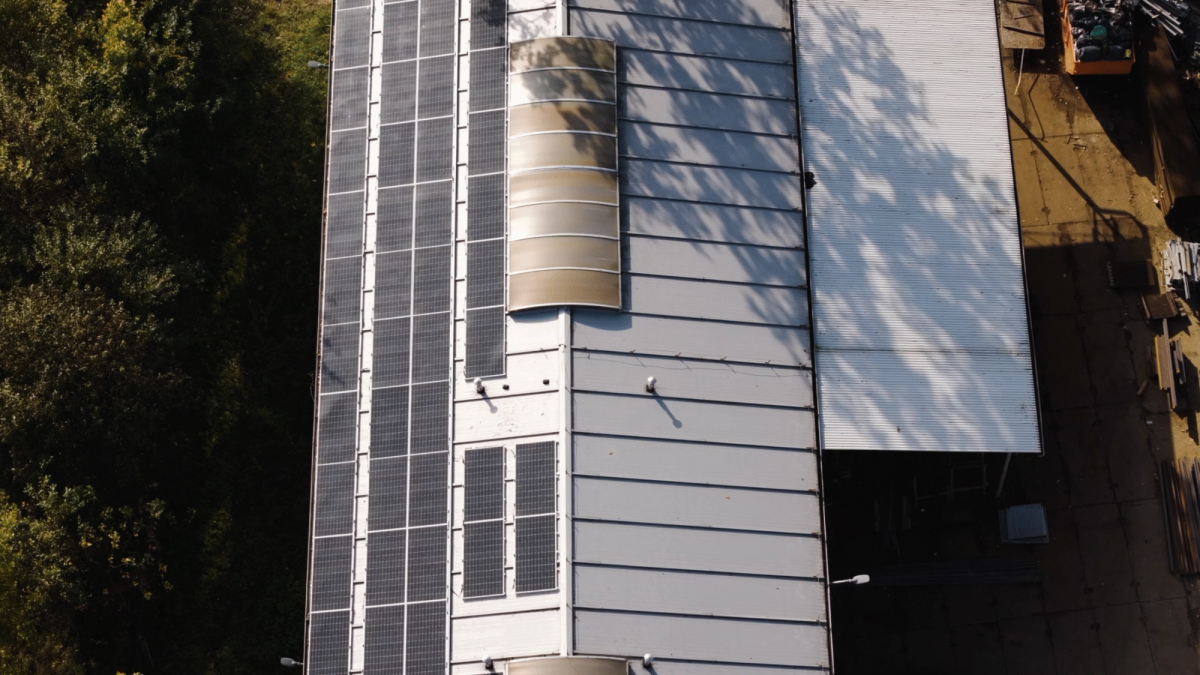
One of the most common mistakes is reducing lightweight photovoltaics to the weight of the module alone. For the roof, though, what counts is not just the panel but the whole system: module, structure, fixings, cabling, layout, how the installation operates and its effect on the building.
That is why with lightweight PV panels you cannot think only in terms of a „lighter product”. You have to think in terms of a lighter, well-chosen system that answers specific structural constraints.
It is precisely for this reason that the contractor's experience matters so much. It is what makes it possible to judge whether the better solution is a framed system, a frameless system, a particular module layout, reduced loads in selected roof zones or a different approach to using the available surface.
The choice of solution must follow from the conditions of the specific building
Lightweight PV panels are not one universal variant that can be applied everywhere in the same way. The process looks different for the roof of a production hall, different for a logistics centre, and different again for a retail building or a warehouse with an unusual covering.
Choosing the right solution should take account of both the technical constraints and the investor's business goals. What matters is not only whether the installation can be built, but also what capacity can realistically be achieved, whether the project matches the energy consumption profile and whether the investment makes economic sense.
Lightweight PV panels therefore require a combination of several competences: technical knowledge, design experience, familiarity with roof structures and an understanding of what large companies need.
Lekkie Panele as an answer to roofs with limited load capacity
Lekkie Panele was created with roofs in mind on which conventional photovoltaics may be too heavy. The system weighs around 5 kg/m², which is up to about 8 times less than traditional rooftop solutions. On large surfaces that difference can be decisive for the whole investment.
Low mass does not, however, remove the need for sound analysis. On the contrary — it opens up new possibilities but requires the whole process to be carried out properly. Only combining a lightweight system with an assessment of the specific roof, a good concept and a precise design makes it possible to judge whether the investment is feasible, safe and commercially justified.
Depending on the building, different solution variants can be considered, including the framed system or the frameless system. The choice between them should follow from the roof's technical conditions, not from a ready-made template applied to every building.
A well-run process can unlock a roof's potential
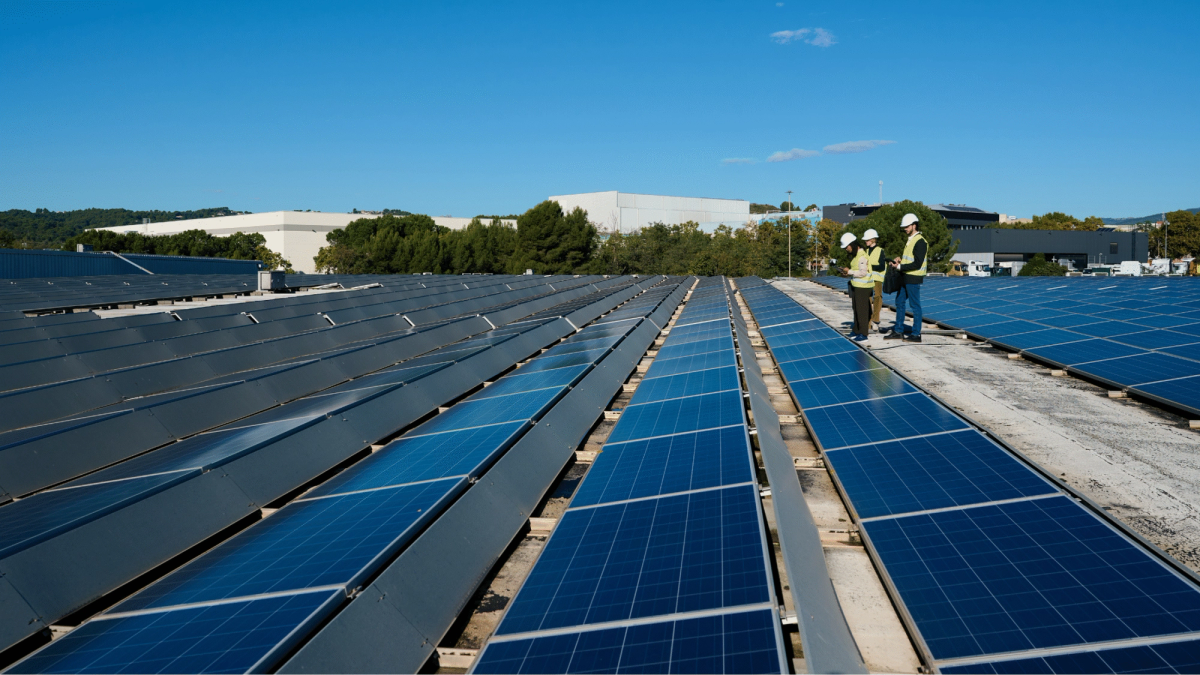
Many corporate roofs have enormous energy potential but go unused, because concern about load capacity arises at the very start of the investment. In such a situation a hasty decision can mean losing the chance to generate your own energy.
A well-run process allows the roof to be looked at more closely. It does not assume up front that the standard solution is the only option. It checks whether a lighter system can reduce the load and let the building's surface be used safely.
That changes the conversation about the investment. Instead of asking „will conventional photovoltaics fit here?”, the question becomes: „how do we run this investment to make the best use of this roof?”
What are the risks of a formulaic approach?
A formulaic approach to lightweight PV panels can lead to several problems. The most common is a mismatch between the solution and the roof's real technical conditions.
It may then turn out that the design does not account for all the loads, assumes too optimistic a module layout, fails to consider the constraints of the roof covering, or treats a lightweight system as a straight substitute for standard photovoltaics.
The risk works the other way too. Without experience it is easy to reject too quickly a roof that, with a properly chosen lightweight system, would have real investment potential. In both cases the company loses: either it exposes itself to a flawed technical decision, or it gives up the chance to lower its energy costs.
Lightweight photovoltaics requires an individual approach at every stage
Lightweight PV panels are a solution for roofs that demand more precision than standard buildings. They should therefore not be planned, designed or implemented to one repeatable pattern.
The whole process should answer specific questions:
- does the roof have enough potential for an installation,
- which system will be the safest for it,
- how to limit the additional loads,
- what capacity can realistically be achieved,
- does the investment make technical and business sense,
- how to design the installation so as not to overload the building,
- how to carry out delivery in line with the technical assumptions.
Only the answers to these questions make it possible to move from a general idea to a well-considered and safe investment.
Lightweight PV panels start with experience
Lightweight photovoltaics can be an opportunity for companies with large roofs, high energy consumption and structural constraints that make conventional PV systems hard to use. It is not, however, a solution that works automatically in every case.
What matters most is experience across the whole process: from roof analysis, through system selection and design, to delivery. It is what determines whether the lightweight system is used properly, whether the roof is assessed well and whether the investment rests on real foundations.
Lightweight PV panels are therefore not an off-the-shelf template. They are a solution that can unlock the potential of many roofs — provided the whole process is run by a team that understands both the technology and the constraints of large buildings.