

Lightweight PV panels for business – how to unlock your roof and gain an advantage
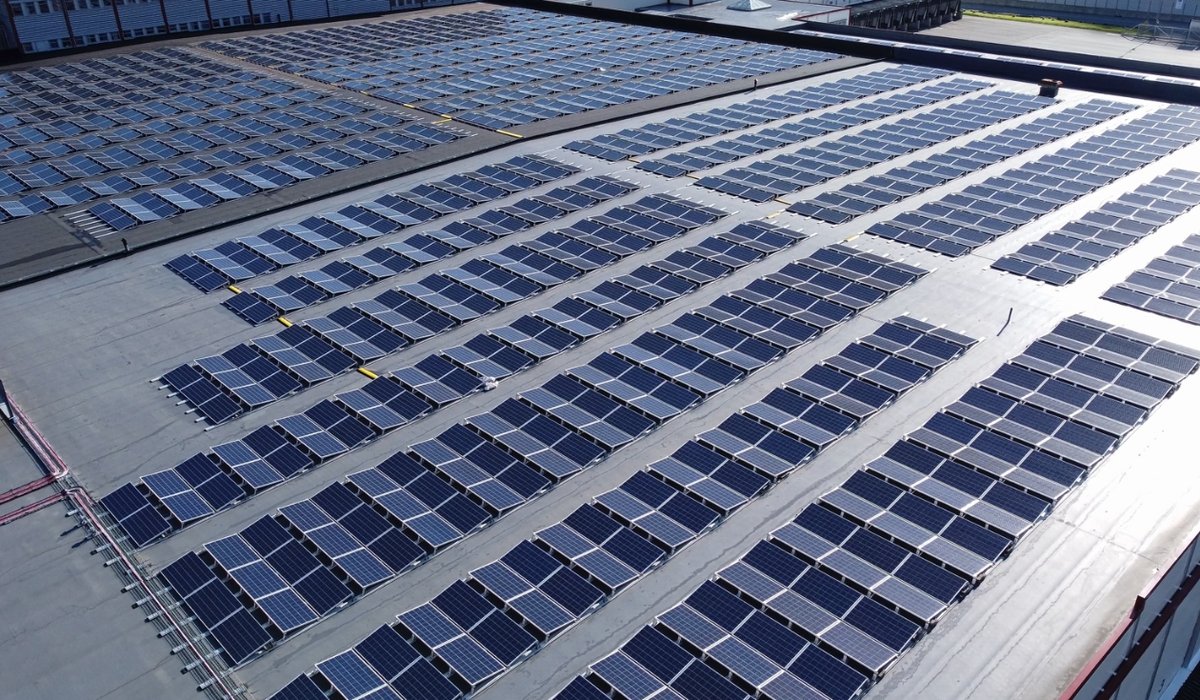
In many companies a photovoltaic project does not stall on the budget or on the return on investment. The barrier turns out to be the roof. The building has a large surface, high energy consumption and good solar conditions, but the structure does not allow a conventional installation to be used safely. That is why so many industrial and warehouse roofs remain an untapped energy resource today.
Lightweight PV panels change that starting point. Instead of adapting the roof to a heavy system, the system can be matched to what the roof can take. For a company that means not only the technical possibility of mounting, but also the chance to bring the investment online sooner, to limit additional costs and to genuinely use a surface that has not been working for the business until now.
Why does roof load capacity block photovoltaics so often?
In conventional installations the problem is not only the mass of the modules themselves. What counts is the whole system: the support structure, the mounting components and, on some roofs, the additional loads resulting from the chosen installation method. It is the sum of these elements that leaves many buildings unqualified for traditional photovoltaics.
This applies especially to steel halls, warehouses, logistics facilities and some older industrial buildings. Such roofs often have a large surface and very good potential for energy generation, but their structure cannot safely carry the weight of a standard system. As a result the investor gives up on photovoltaics not because they do not need it, but because the conventional technology does not fit the building's parameters.
What does a lightweight PV system change?
The most important change is that the project no longer starts with the question of whether the roof will withstand a standard installation. It starts with matching the technology to what the structure can genuinely take. A lightweight PV system reduces the load of the entire installation and allows the roof to be viewed differently than in the traditional model.
This matters, because in many buildings the issue is not a lack of space but a lack of safe load-bearing headroom. Once the installation stops being an excessive load on the roof, the way opens to a project that was previously out of reach. That is precisely why lightweight panels are today not merely an alternative to conventional modules, but often the only rational option for buildings with structural constraints.
How do lightweight panels unlock low load capacity roofs?
The advantage of such technology does not lie solely in the lower mass of the module. What is decisive is that the lightness applies to the entire solution: the mounting method, the reduction of additional structural elements and a better fit between the system and the type of roof covering.
In practice this means several important things:
- a lower load on the roof as a whole,
- less need to interfere with the building's structure,
- an easier fit to demanding roof coverings,
- a better chance of using surfaces previously excluded from investment.
It is thanks to this that lightweight PV systems can be considered where conventional solutions ended in a quick refusal.
Why does this matter so much in industrial and logistics buildings?
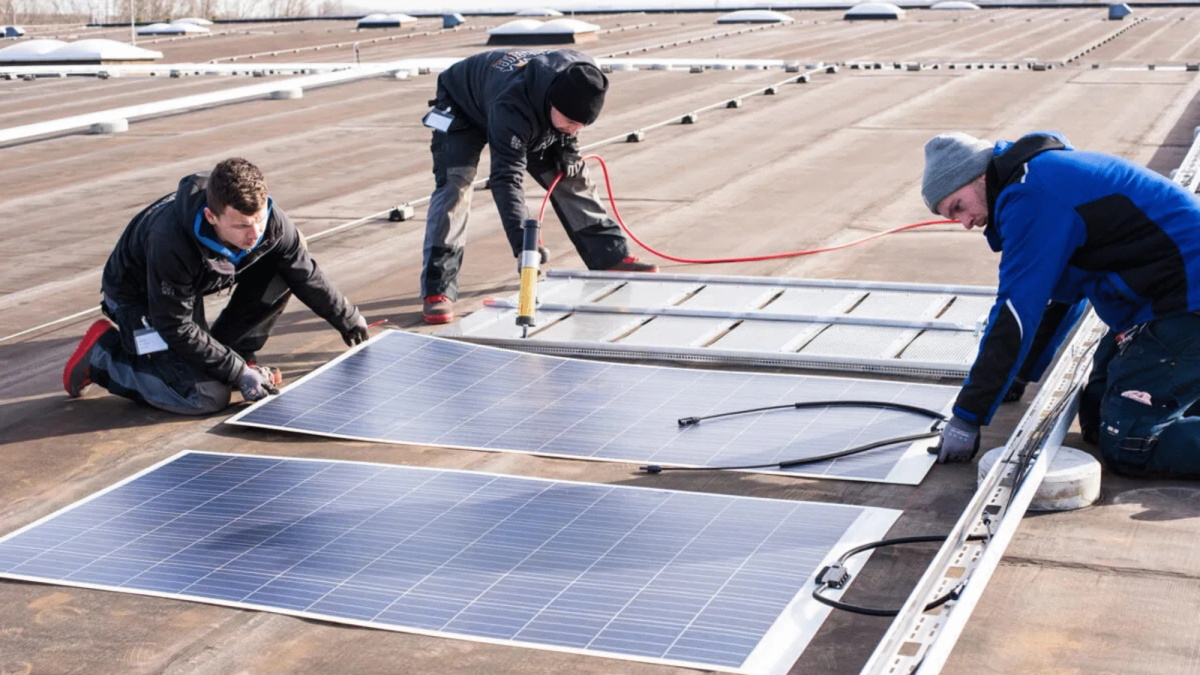
In halls, warehouses and logistics centres the roof is very often the largest available surface that can be devoted to energy generation. At the same time it is in these buildings that load capacity constraints tend to bite hardest. Many were designed with cost efficiency in mind, not with the later mounting of a heavy PV installation.
For businesses this creates a concrete problem: on the one hand they have space that could lower energy costs, on the other they cannot use it in the standard model. Lightweight photovoltaics breaks that contradiction. It turns the roof into an asset that can be activated without a costly rebuild and without introducing additional structural risk.
What does the company gain?
The most important benefit is unlocking the investment in the first place. Without that there is no question of savings, of energy independence or of using the roof's potential. Only once the technology matches the building's parameters can you move on to a real analysis of the business effects.
For the company this means:
- the ability to mount PV without strengthening the roof structure,
- lower design and execution risk,
- a better chance of running the investment smoothly without disrupting the building's operation,
- better use of the building's existing surface.
These are benefits that reach beyond the technology itself. In practice they affect the pace of decisions, the safety of implementation and the ultimate viability of the project.
Where does the cost advantage come from?
In energy-intensive sectors a cost advantage very often starts with access to cheaper energy. If one company can bring an installation online on its own roof while another cannot for structural reasons, the difference quickly becomes felt in operations.
So it is not only about having photovoltaics as such, but about the company being able to use a resource unavailable to part of the competition. That translates into lower energy costs, greater cost predictability and a better position in a market environment where energy efficiency matters more and more.
Why can lightweight panels give an advantage beyond energy costs?
For many businesses investing in photovoltaics today means more than electricity bills. Requirements on energy efficiency, the expectations of business partners and issues around ESG and operational resilience play an increasingly large role.
That is why lightweight panels can build an advantage in other areas too:
- they make it easier to use existing infrastructure without a costly refurbishment,
- they help adapt a building faster to new market and environmental requirements,
- they strengthen the company's image as an organisation that deploys solutions where others still see constraints.
This is particularly relevant in logistics, manufacturing, e-commerce and retail — everywhere large roofs go together with high energy consumption and strong cost pressure.
When is it worth considering lightweight panels straight away?
There is no point starting with a conventional design if it is clear from the outset that the roof has limited load capacity, calls for a cautious mounting approach, or the investor does not want to interfere with the building's structure. In such cases analysing a lightweight PV system from the start saves time and avoids designing a solution that will turn out to be too heavy or too risky anyway.
It is especially worth taking into account for:
- warehouse and logistics halls,
- industrial buildings with a lightweight roof structure,
- buildings that must stay in continuous operation while the investment is carried out,
- roofs where limiting interference with the covering is critical.
It is here that lightweight technology most often delivers the greatest value.
Lightweight PV panels are not a workaround, but a way to use a roof's real potential
A roof with low load capacity does not have to mean giving up on photovoltaics. Increasingly it only means that a technology matching the building's actual constraints has to be used. That is precisely why lightweight PV panels are becoming an important tool today, not only technically but also commercially.
For companies this is a chance to start generating energy where standard systems do not apply. And where the competition still sees an obstacle, well-chosen technology can become a concrete advantage.