

The myth of the „roof with no potential”. How lightweight panels change the way PV investments are assessed
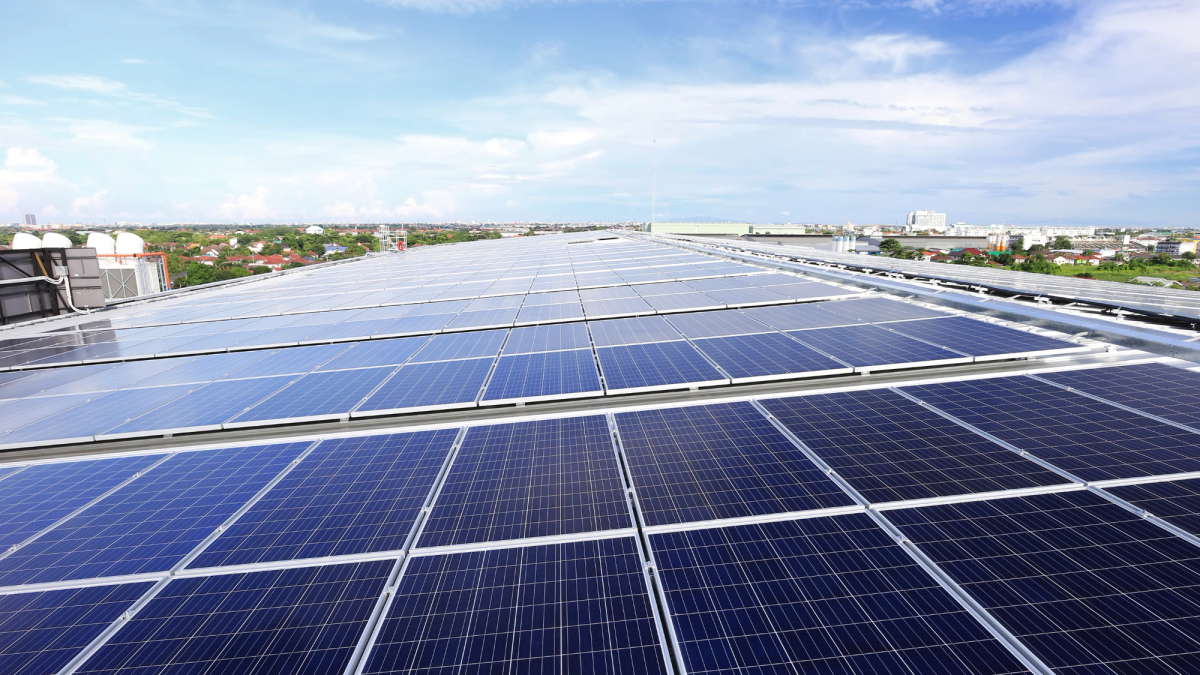
A roof that will not carry a standard photovoltaic installation is very easily written off as a „roof with no potential”. In practice that verdict is often reached too quickly. The problem frequently lies not with the building itself, but with a PV system that is too heavy to be safely matched to its parameters.
That is an important distinction, especially for companies with large roofs on halls, warehouses, logistics centres or retail buildings. If an earlier analysis covered only a standard installation, it is worth checking whether a lightweight PV system changes the outcome of the whole investment assessment.
Where does the myth of the „roof with no potential” come from?
The myth of the „roof with no potential” often starts from a genuine piece of technical information: the roof may not carry a standard photovoltaic installation. That should not be taken lightly, because the load capacity of the structure is one of the key safety parameters. The problem only arises when too broad a conclusion is drawn from that diagnosis: if a conventional installation is too heavy, then photovoltaics makes no sense at all.
A roof may be unsuitable for one type of installation and still hold potential for a lighter solution better matched to its constraints. That is why, with commercial buildings, the far more accurate question is not „is this roof suitable for PV?” but „which PV system can it safely be analysed against?”.
Why is standard photovoltaics sometimes too heavy?
A standard PV installation is not just modules. It is also the support structure, fixings, ballast, cabling and the way loads are distributed across the roof. On small installations differences in mass may seem less significant, but on large commercial buildings every extra kilogram works across the entire surface.
That is precisely why a large roof area does not automatically mean a straightforward photovoltaic investment.A production hall, warehouse or logistics centre may have excellent energy potential and at the same time only limited load-bearing headroom for a conventional PV system.
The most common barriers appear when:
- the roof structure has limited load capacity,
- a conventional system requires too much ballast,
- the building was designed without any future PV installation in mind,
- the roof has an unusual covering or interference must be kept to a minimum,
- the earlier analysis did not cover a lightweight technology option.
In such a situation the point is not to ignore the roof's constraints. The point is to check whether a solution exists that addresses those constraints from the outset.
How do lightweight panels change the assessment of a PV investment?
Lightweight panels change the assessment because they reduce one of the most important technical problems: the mass of the whole system. As a result, a roof previously judged too difficult for a conventional installation can come back into the analysis as a different technological variant.
We combine a low system mass — around 5 kg/m² — with a design approach for roofs of limited load capacity. That is roughly four times less than traditional installations, whose weight can reach about 20 kg/m². On large roofs such a difference can genuinely matter for both the technical and the business assessment of an investment.
This does not mean every roof is automatically suitable for photovoltaics. It does mean that many roofs previously deemed problematic are worth re-examining. A lightweight solution does not replace technical analysis, but it can fundamentally change its starting point.
The system should fit the roof, not the other way round
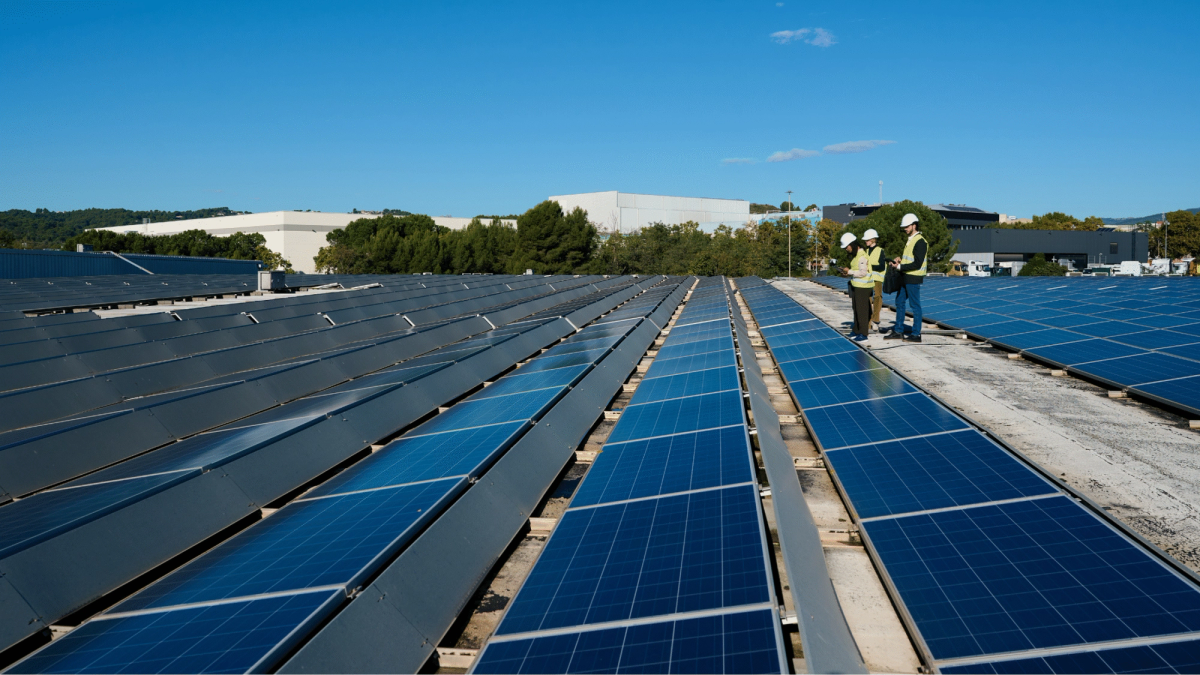
With roofs of limited load capacity, the idea that every building must be made to fit a standard solution simply does not work. If a conventional installation is too heavy, the rational answer is not to stretch what the structure can take, but to choose a technology that better suits the building's conditions.
The system should follow from the roof's parameters: its load capacity, covering, technical layout, surface area and mounting constraints. Only then can we speak of a safe and sensible investment.
This approach is particularly important on large corporate buildings. The larger the roof area, the more the mass of the whole system, the distribution of loads and the right choice of technological variant come to matter.
When is it worth re-examining a roof?
A second analysis makes most sense when the roof was rejected for a standard PV installation, or when the earlier assessment covered conventional technology only. In such a case a negative result does not have to mean the roof has no potential. It may mean it was analysed against a system that was too heavy.
It is worth revisiting the subject if a company has an unused roof and still high energy costs. Especially where the building has a large surface but the investment was halted by concerns about load capacity, ballast or the mounting method.
A second analysis is worth considering when:
- the roof was previously rejected on load capacity grounds,
- a standard installation required too much load,
- the company has a large roof area at its disposal,
- the building is older, being refurbished or structurally difficult,
- the earlier concept did not include a lightweight PV system,
- the investor was told „it cannot be done on this roof”.
In many cases such a roof does not call for abandoning the investment, only for a different technological variant and a more thorough analysis.
What sets our approach apart?
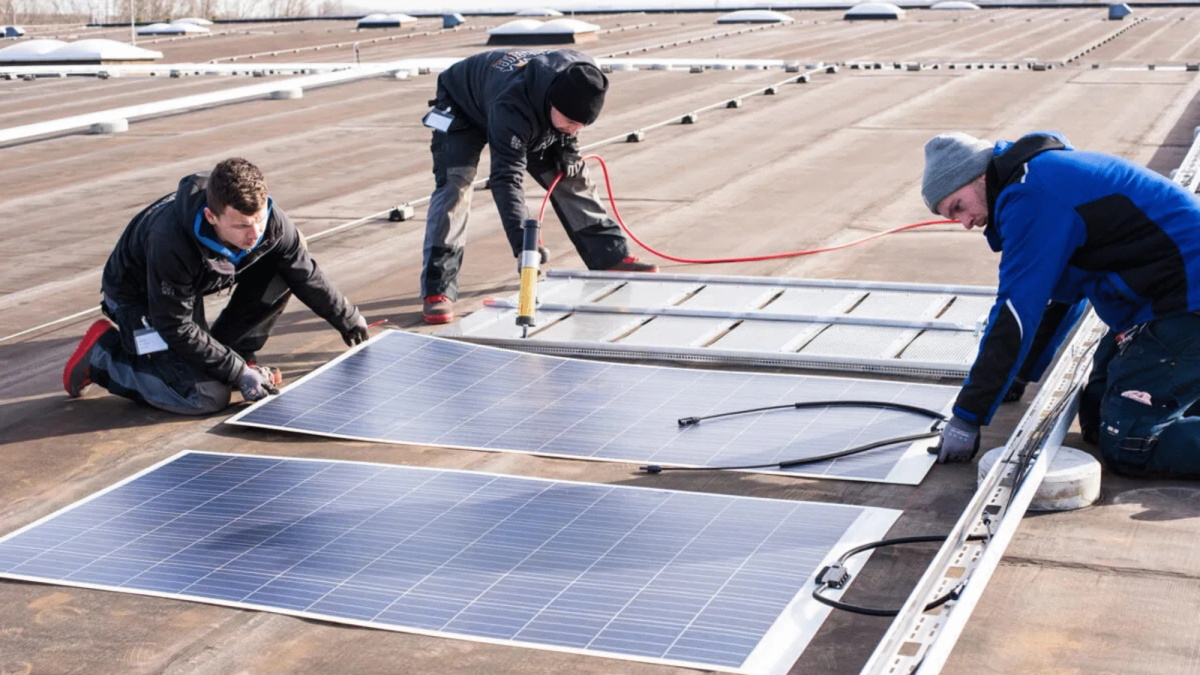
On roofs with limited load capacity it is not only the technology that counts, but the way the whole investment is run. We combine a lightweight PV system with experience in assessing buildings that standard photovoltaics finds too demanding.
This lets us judge whether a roof genuinely has to be excluded, or whether it simply calls for something other than a conventional installation. Both the technical parameters and the investor's business objective matter here: real energy output, viability and the safety of the building.
Depending on the building's conditions, different variants can be considered, including the framed system or the frameless system. The choice should follow from an analysis of the specific roof, not from a single off-the-shelf template.
Why can the myth of the „roof with no potential” cost a company real money?
For an investor the worst-case scenario is not the mere fact that a roof has constraints. A far bigger problem can be a situation in which the company rejects the entire investment too quickly and for years leaves unused a surface that could be generating energy.
An unused roof often means unused potential to bring energy costs down. If a business has high energy consumption and a large roof area, a second analysis may open the way to an investment previously considered impossible.
This matters especially at a time when companies are looking for greater cost predictability and want to make better use of their own infrastructure. A roof that seemed like a problem may turn out to be an asset — provided it is assessed using the right technology.
A roof with limited load capacity does not have to be a roof without a future
The myth of the „roof with no potential” is worth replacing with more precise thinking. A roof may not carry a standard installation and still deserve analysis for lightweight photovoltaics. These are two different things that should not be lumped together.
Limited load capacity does not automatically rule out an investment — it means the system has to be matched to what the building can actually take. That is precisely why lightweight technologies matter so much for large commercial, industrial and warehouse buildings.
Not every roof will be suitable for PV. But many roofs previously rejected for a standard installation may simply need a fresh, more precise assessment.
Check whether your roof really has no potential
If your roof was previously rejected for a standard PV installation, it is worth analysing again from the perspective of lightweight panels. We combine low-mass technology with experience in assessing roofs of limited load capacity, which is why we help companies check whether their building can still work towards generating its own energy.
Get in touch if you want to verify your roof's potential and find out whether a lightweight PV system is the right solution for your company.